Throwback Thursday Classic Post: Specialty Leader vs Detailer – What’s the Difference?
Many Medical Corps officers don’t understand the difference between their Specialty Leader and their Detailer. After you read this post, this won’t be a problem.
DIFFERENCE #1 – WHO THEY WORK FOR
A Specialty Leader works for Navy Medicine (BUMED), the Surgeon General, and the Medical Corps Chief while a Detailer works for Navy Personnel Command (NPC or PERS). NPC/PERS is a line command, while BUMED is obviously medical. This difference is probably not of significance to the average Naval physician, but it can make a difference at times because these two commands (and people) will look at things from a different perspective.
For example, let’s say you are one of two subspecialists at NMC Camp Lejeune and you have a fairly light clinical load. You decide you want to leave early to get to your next command, Naval Medical Center Portsmouth (NMCP), because they are actually down one provider in your specialty due to the illness of another member of your community. Your Specialty Leader will probably endorse this early move because it makes sense. You are underemployed at Lejeune and there is a need at NMCP.
Your Detailer, however, will look at it differently. First, you haven’t served your full tour, so moving you early will require a waiver that may be denied by PERS. This largely has to do with money and PCS rules and has nothing to do with your specialty or the needs of the Navy. I’m not saying that Detailers don’t care about the needs of the Navy because they do, but they are constrained by the rules of PERS while a Specialty Leader is not.
DIFFERENCE #2 – WHAT THEY DO
A Specialty Leader serves as a liaison between you, BUMED, and your specialty as a whole. He or she also coordinates deployments, although the control they have over this was lessened by the return to platform-based deployments (deployments determined by what billet you are in or what unit/platform you are assigned to rather than whose turn it is to deploy). They also serve as a consultant both to you and your Detailer when it comes to career management and PCS moves.
A Detailer is your advocate to help you advance in your career, prepare for promotion boards by improving your officer service record, and negotiate orders for your next PCS. They will often speak with both you and your Specialty Leader while trying to balance your needs with the needs of the Navy. They also are the final approval authority for extension requests and actually write your PCS orders.
DIFFERENCE #3 – WHAT THEY DON’T DO
Specialty Leaders do not write orders. Many physicians think that the Specialty Leader is the one who decides what orders they get and where they PCS, but the reality is that Specialty Leaders can’t write orders. Only Detailers can, therefore it is the Detailer who makes the final decision in nearly all cases. If there is a good Specialty Leader-Detailer relationship, most of the time both are in agreement and there is no controversy, but about 5% of the time there is at least some level of disagreement that has to be worked out.
Detailers can write your orders to a command, but they do not influence who gets command-level leadership positions. For example, you may want to go to Jacksonville to be the Department Head of your specialty’s department. A Detailer can write you orders to Jacksonville, but which physician the command picks to be Department Head is up to them, not the Detailer (or the Specialty Leader).
Specialty Leaders will often talk to commands, but Detailers usually do not. The Detailer is SUPPOSED to talk to three people – you, the Specialty Leaders, and the Placement Officers. The Placement Officers are officers at PERS who represent the commands. You can think of them as the detailers for commands. They make sure that commands aren’t taking gapped billets, that the providers sent to the command meet the requirements of the billet they are entering, and weigh in on other issues like extension requests.
I say that a Detailer is SUPPOSED to talk to three people and USUALLY does not talk to commands, but the reality is that commands frequently call the Detailer instead of talking to their Placement Officers. This often happens because the Director at a command knows the Detailer but doesn’t know the Placement Officer. In addition, the Detailer is usually a physician (3 of 4 Medical Corps Detailers are physicians, the 4th is a MSC officer) and the Placement Officer is always a MSC officer. Physicians like talking to other physicians.
Finally, Specialty Leaders do not alter your officer service record. In fact, unless you send it to them, they can’t even see it or your FITREPs. Detailers, on the other hand, can see just about everything and can update/change some things, mostly additional qualification designators or AQDs.
WHY SHOULD I CARE ABOUT ANY OF THIS?
Because you must actively manage your career to get what you want. This means you should talk with both your Specialty Leader and Detailer 9-18 months ahead of your projected rotation date (PRD). You should discuss your short and long-term goals, whether you want to PCS or extend, whether you are planning a Naval career or want to resign or retire, your family situation, and your medical situation if applicable.
Most importantly, though, is to be honest with both your Detailer and Specialty Leader. Most Specialty Leaders get along well with the Detailer, so if there is any disagreement between the three of you make sure that you keep things professional and respectful at all times. It’s a small Navy and, to be honest, it will be readily apparent if you are playing one off against the other.
FY20 Enlisted to Medical Degree Preparatory Program Announcement
Here’s a link to the NAVADMIN:
FY20 Enlisted to Medical Degree Preparatory Program Announcement
VADM Raquel Bono: The End of a Brilliant Tenure, the Beginning of a New Chapter
VADM Bono retires today. Here’s an article about her:
VADM Raquel Bono: The End of a Brilliant Tenure, the Beginning of a New Chapter
US News and World Report – The Military’s Top Medical School Could Be in Peril
Here’s a link to this article:
A Hearty Thanks to MCCareer.org Readers – CDR Schofer is Now CAPT Schofer and the Incoming Deputy Chief of the Medical Corps
Starting a blog about how to promote to Captain is perhaps a little nerve racking until you’ve actually done it yourself. Today is that day!
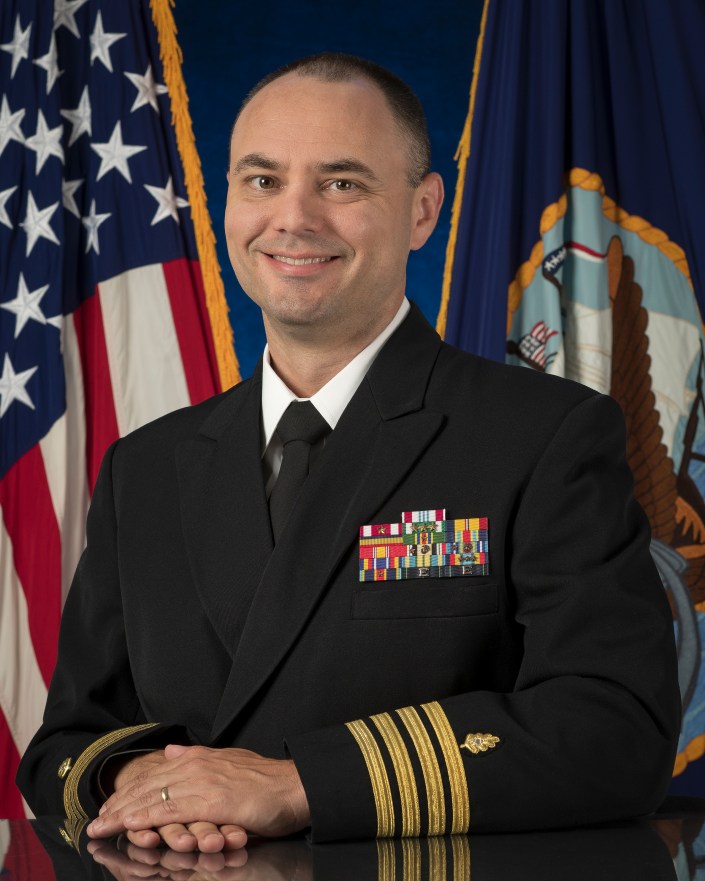
(Note – Neither the Department of the Navy nor any other component of the Department of Defense has approved, endorsed, or authorized this blog.)
Whew! I guess I no longer need to worry about being that guy who told everyone how to promote to Captain but couldn’t do it himself.
Also of note, this week I check-in to BUMED as the next Deputy Chief of the Medical Corps, which is a dream job of mine. Thanks to all the readers of this blog who definitely contributed to this unexpected turn in my career.
How to Get an Official Promotion Certificate
Pulled this off the Medical Corps Sharepoint page (pick your e-mail certificate)…
Officers interested in receiving an official promotion warrant/certificate should email Mr. Jeffrey Bellew at jeffrey dot bellew < at > navy dot mil and include:
- Full Name
- Rank Promoting to
- Date of Rank
- Mailing address
Please do not request more than 3 weeks prior to promotion date.
FY20 Navy Medicine Leadership Course Catalog
Here it is:
MCCareer.org – The Book – Chapter 4 – Medical Corps Career Paths
By Joel Schofer, MD, MBA, CPE
(Note: The views expressed in this chapter are those of the author(s) and do not necessarily reflect the official policy or position of the Department of the Navy, Department of Defense, or the United States Government.)
Introduction
There are many career paths available to Medical Corps officers. The five primary career paths include:
- Academic
- Administrative
- Clinical
- Operational
- Research
All of them can lead to promotion to O6. Here is a slide summarizing the Medical Corps career paths:

When comparing a Naval career to a civilian one, it is often easier to jump from one career path to another in the Navy than it would be in the civilian job market. All it takes is for you to take a new set of orders and you have switched career paths without having to start over. Let’s discuss the five career paths.
Academic Career Path
The academic career path involves much of the same activities as in the civilian world. You will largely be stationed at military treatment facilities (MTFs) with graduate medical education (GME) programs. In the Navy, these will include Family Medicine teaching hospitals/medical centers (Camp Lejeune, Camp Pendleton, Fort Belvoir, Jacksonville), Japanese MTFs with Japanese internships (Okinawa, Yokosuka), and medical centers with multiple residency programs and internships (Bethesda-Walter Reed, Portsmouth, San Diego). In addition, you could be stationed at the Uniformed Services University of the Health Sciences (USUHS) or in an educational support role at the Bureau of Medicine and Surgery (BUMED).
Aside from your clinical activity, you’ll be focusing on teaching and academic production. If you’re smart, you’ll work toward academic promotion in your department at USUHS by obtaining a faculty appointment (this newsletter tells you how to get one) and progressing toward academic promotion. Once you graduate from residency, you will likely be appointed an Assistant Professor, which means you are considered a local or regional expert. The next step would be to promote to Associate Professor, where you are a regional/national expert. Finally, you would strive for Professor, which usually indicates you are a national/international expert in your field.
If you receive a USUHS faculty appointment and, with the guidance of your USUHS department, actively work toward academic promotion, your academic career will be forced to progress. In my experience, most people obtain their initial appointment as an Assistant Professor but never progress from there. If you want to progress, you will need not only a curriculum vitae (CV) and biography, but also an educator’s portfolio. This portfolio can be a lot of work to create and maintain, and it is infinitely easier if you start early in your career.
The other relatively recent development in the academic career path is that there are many more options that are considered acceptable academic productivity. Traditionally, you had peer-reviewed publications and book chapters but little else. With the rise of the internet and social media, smartphone applications, blogs, podcasts, and other on-line options exist for you to produce academically and build your expertise and influence.
Research Career Path
The research career path is much like the academic one just discussed, but with a research focus. You would likely spend most of your career in MTFs with GME programs, but you can really do research anywhere in the Navy. Of particular interest, the Navy has commands whose primary missions are research, like Naval Health Research Center, Naval Medical Research Unit Dayton, and others.
Anyone planning a research career, you should strongly consider obtaining advance training. This could involve a fellowship, an advanced degree or certificate program, or additional continuing medical education. USUHS offers training in research.
Administrative Career Path
The administrative career path usually starts when you assume a leadership role appropriate for a junior to mid-grade officer. This would include Assistant Department Head, Department Head at a small/medium Military Treatment Facility (MTF), Medical Director, Senior Medical Officer, a leadership role on the Medical Executive Committee (MEC), or any other position where you assume administrative responsibility.
After the initial role, you gradually assume more responsibility, potentially at larger and at different types of commands. Although it is possible to obtain some of these roles as an O4, once you are selected to O5 a new world of positions is open to you that is easier to obtain as a CDR or CAPT. These would include Chair of a MEC committee, Department Head at a large MTF, Associate Director, Director, MEC Vice-President or President, Chief Medical Officer, Officer-in-Charge, or other positions with significant leadership roles. Once you are selected for O6, you can transition into Executive Medicine and can screen for Executive Officer and later Commanding Officer positions. If you are successful in your senior O6 leadership positions, you may be considered for promotion to the flag ranks as a Senior Healthcare Executive.
Many physicians who hope to rise to high levels of administration will try to increase their knowledge base by obtaining additional training. This can include military course like MedXellence or the Senior Officer Course in Military Justice and Civil Law. It can also include formal education in management and administration, such as a Master’s in Business Administration, Medical Management, or Healthcare Administration. There are many ways to obtain these degrees both inside and outside the service.
Clinical Career Path
The clinical career path is probably the purest and most natural career path. Why did you go to medical school? Usually, it is because you wanted to be a doctor, and the Navy needs people who want to be a doctor.
The first step in pursuing a career path is to complete a residency or fellowship in your desired field(s) of choice. After completing this graduate medical education, although not required by the Navy, you should strive to achieve board certification in these specialties, if available. First, it allows you to receive board certification pay. Second, it allows you to get a 5 in the professional expertise trait on your fitness report. Third, it is generally required to promote. Finally, when you moonlight or get out of the Navy, you will earn more than someone who is not board certified. And we all eventually get out of the Navy!
After achieving board certification, it is assumed that you will maintain it. In fact, it is required to continue receiving board certification pay. If you ever let your certification lapse, you must notify your special pays coordinator so they can terminate the board certification pay.
The downside of a purely clinical career path is that it can make it harder to promote to O6 if all you do is see patients and you are not willing to take on at least one significant collateral duty. I’m not saying it is impossible to promote as a pure clinician, but it can make it harder. On the positive side, a board certified clinician should be able to promote to O5, and some of the Commanders I know who are purely clinicians are some of the happiest physicians I know. You want me to join that committee? No thanks. I’m happy just being a doctor!
Operational Career Path
Many physicians pursue an operational career path because it is why they joined the military. You can be a doctor anywhere, but in the Navy you can be in submarines, dive, parachute, and all sorts of other fun and unique things.
An operational career path most commonly begins with a tour as a General Medical Officer (GMO) with the Marines or on a ship, a Flight Surgeon (FS), or Undersea Medical Officer (UMO). For those that go straight through in residency training, it may be that their first set of orders after residency takes them to an operational billet. In either case, physicians with an operational unit will probably find that they have a lot of responsibility for people with a work hard, play hard mentality. The 72 and 96 hour periods of leave that are common around holidays (play hard) are balanced by the requirement to deploy or train in the field (work hard).
As a physician promotes and becomes more senior, there are often opportunities to assume more senior roles specific to the operational community of choice. Along the way, it will be assumed that you are maintaining your clinical skills. Because it is often difficulty to maintain a full scope of practice in an operational setting, this may require extra effort to practice in a Military Treatment Facility or moonlight in your free time.
Summary
In summary, there are five primary career paths in the Navy. They include academic, administrative, clinical, operational, and research. In the Navy, it is usually fairly easy to transition from one career path to another without losing a step. Finally, pursuing all of them can lead to a fulfilling career and promotion to O6.
 Joel Schofer's Career Planning Blog