Author: Joel Schofer, MD, MBA, CPE
Finance Friday Articles
- 10 Reasons People Regret Buying Whole Life Insurance
- Die With Zero
- Financial Superpowers
- How to Open a Roth IRA for Your Kids (and Should You)?
- Pick Your Investment Mix
- The Student Loan Holiday Is Ending: What You Need to Do Now
- Upfront Costs Of Buying A Home
- You Probably Need Less Money Than You Think For Retirement
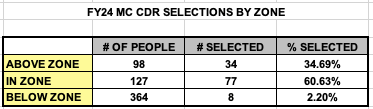
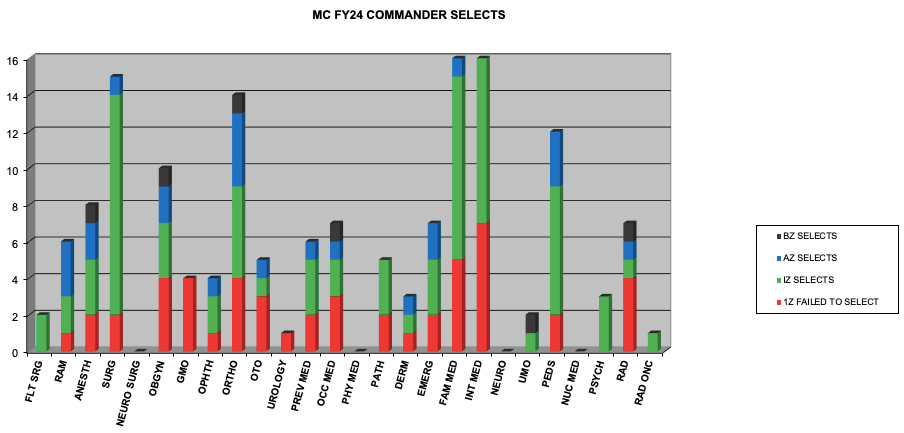
You Made CDR! Now What?
If you are one of the lucky people who made CDR, I have some things for you to consider:
- The next 2-3 years of fitreps may mean very little to your overall career. First, you are soon going to be in the most competitive group in the Medical Corps, Commanders scratching and clawing to make Captain. If you are at a medium to large command, no matter what you do as a junior Commander, you are likely to get a P (promotable) on your fitreps. That is just how it works for most commands.
- This first bullet means that now is the PERFECT time to do something “alternative” (off the usual career path for a physician) or take a position that you know will get you 1/1 fitreps or be part of a very small competitive group. Go to the War College. Take a senior operational job where you’ll get a 1/1 fitrep. Become a Detailer. Apply for fellowship because the NOB fitreps won’t hurt you as a junior Commander or Commander Select. Now is the time to do these type of things. You don’t want to wait until you are a few years below zone for Captain. When you reach this stage you’ll need competitive EP fitreps.
- After you are selected for your next rank is also a great time to move/PCS. Have you ever been OCONUS? If not, now would be a great time to go. You can PCS somewhere for 2-3 years and then PCS to the command where you are going to set up shop and try to make Captain. At OCONUS commands there is more turnover of staff, so major leadership jobs like MEC President, Department Head, and Director positions open up more frequently, setting you up to get a senior position when you return to CONUS.
- You may think I’m crazy, but it is time to start thinking about how you are going to make Captain. As I mentioned in the first bullet, getting a job that will make you a Captain is tough and competitive. Now is the time to do the things that will make you an excellent candidate for one of those jobs. Want to be a Residency Director? Maybe you should get a degree in adult or medical education. Want to be a Director? Maybe you should get a management degree like a Masters in Medical Management or an MBA. Want to be a senior operational leader? Now is the time to do Joint Professional Military Education I and/or II.
- Here is a list of the jobs that I think will likely make you a Captain. Read the list…figure out which of these jobs you are going to use to make Captain…and get busy preparing yourself to get them:
- Residency Director
- Department Head in a large MTF
- Director
- Chief Medical Officer
- Officer-in-Charge
- Major committee chair
- Medical Executive Committee President
- BUMED staff
- Specialty Leader
- Deployment requiring an O-5 or O-6
- Detailer
- Senior operational leader
- Division/Group/Wing Surgeon
- CATF Surgeon
- Amphib or CVN Senior Medical Officer
Optimally you’ll have the time when you are an O5 to do multiple jobs on the preceding list. For example, as an O5 I had been a Detailer, a Specialty Leader, Department Head, Associate Director, and CO of a deployed unit. My next step was to become a Director at a major MTF, and while I was a senior LCDR and CDR I obtained a Naval Postgraduate School MBA as well as achieved certification as a Certified Physician Executive to try and make myself a competitive candidate for a Director position. Ultimately, I became the Director for Healthcare Business at NMC Portsmouth.
Congratulations on making Commander…take a deep breath…and start thinking about some of the things I mentioned in this post. Before you know it you’ll be in zone for Captain.



A Message from the Assistant Secretary of Defense for Health Affairs
MHS Colleagues:
August is always a busy month, as many of us juggle demanding work schedules with family summer vacations and getting kids ready to start school again. I appreciate all the hard work you’re doing to meet the many deadlines and requirements we have to fulfill.
Last week, I had the honor of addressing our IT professionals at the Defense Health Information Technology Symposium in New Orleans, and this week I’m in Florida, speaking at the Military Health System Research Symposium. These two events represent an important part of a critical priority – that of fostering transparency and collaboration among all the great minds working on advanced research and technology solutions. Technology advances hold great promise to help us meet a range of evolving needs from delivering greater access to health care at the point of need, to developing more effective treatments, to harnessing the power of data to inform clinical and operational decisions. Collaboration between government, industry and academia can accelerate these accomplishments and I challenge each of you to support that effort.
I also want to take this opportunity to thank several departing members of my staff, while welcoming new ones. In the past weeks, we said farewell to:
- Mr. Ryan Uyehara, Special Assistant, who provided invaluable counsel and unflagging energy to helping this office stay on top of fast-moving issues,
- CAPT Marrie Read, USN, MHS Governance Senior Policy Advisor, who managed the variety of governance activities with unflappable professionalism,
- COL Rich Malish, USA, Military Deputy, who acted in the Chief of Staff capacity while also giving us the benefit of his clinical and operational experience, and
- LCDR Aaron Hill, USN, Military Assistant, who provided stellar support to the PDASD and the entire office with his strong organizational ability and extensive understanding of issues.
We thank each of them, wish them well in their new endeavors, and at the same time, warmly welcome our new staff members:
- COL Kathy Spangler, USA, our new Senior Military Deputy, on board for just over a week but already making an impact,
- CDR Monica Gonzalez, USN, MHS Governance Senior Policy Advisor, who has capably taken over the responsibilities of managing our governance activities, and
- LCDR Sierra Nichols, USN, Military Assistant, who in just a few weeks has become indispensable as she provides direct support to Ms. Mullen.
Please make the effort to get to know our new teammates — I’m confident you will find working with them to be very rewarding. As always, please stay safe as you enjoy the last weeks of summer.
Very Respectfully,
Lester
Lester Martinez-López, M.D., M.P.H.
Assistant Secretary of Defense for Health Affairs
 Joel Schofer's Career Planning Blog